
HubSpot vs Attio: An In-Depth CRM Comparison for Modern Businesses
Discover how HubSpot vs Attio compares for modern businesses, analyzing scalability, integrations, pricing, and customization.
HubSpot offers an all-in-one CRM platform with built-in marketing, sales, and service tools, while Attio provides highly flexible data modeling for modern teams. Both platforms serve different business needs. HubSpot excels in scalability, from a one-person show to an enterprise-level organization, and Attio offers customization flexibility for early-stage startups and small teams. This in-depth HubSpot vs Attio showdown sheds light on the comparison to help you select the right CRM.
Choosing the right Customer Relationship Management (CRM) system can make or break your business operations. A CRM centralizes customer data, tracks interactions, and automates workflows across marketing, sales, and service. With the global CRM market projected to reach $157.53 billion by 2030, selecting between established platforms like HubSpot and innovative newcomers like Attio requires careful consideration.
HubSpot, founded in 2006, has become synonymous with inbound marketing (now loop marketing) and all-in-one business solutions. The platform serves everyone from small startups to large enterprises with its expansive ecosystem. Attio, launched in 2019, represents the next generation of CRM tools. Built for modern teams, it emphasizes flexibility and collaboration, often compared to productivity tools like Notion or Airtable.
Affiliate Disclosure: This article contains affiliate links. We may earn a commission if you purchase through these links, at no additional cost to you.
Also read how HubSpot compares with Brevo and with Folk.
HubSpot CRM: Unified Platform for Every Business Scale
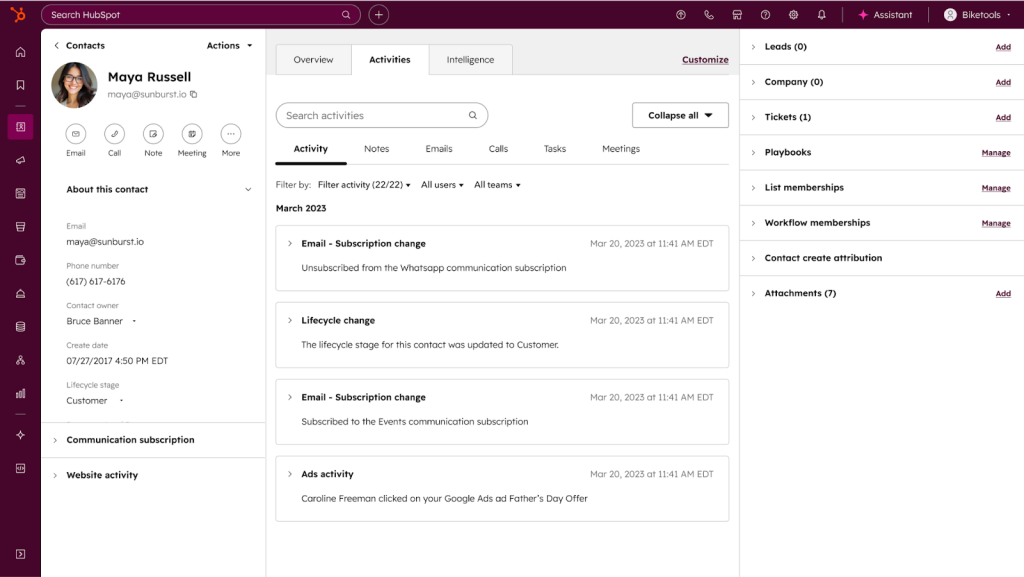
Ease of Use and Integration
HubSpot’s clean, intuitive interface makes user adoption seamless across organizations. The platform’s dashboard provides customizable overviews of key metrics and performance indicators.
The real standout feature is HubSpot’s extensive integration ecosystem. With over 2,000 integrations in the HubSpot App Marketplace, businesses can connect virtually any tool in their tech stack. This includes major platforms like Salesforce, NetSuite, Slack, and Google Workspace.
Advanced Marketing and Sales Features
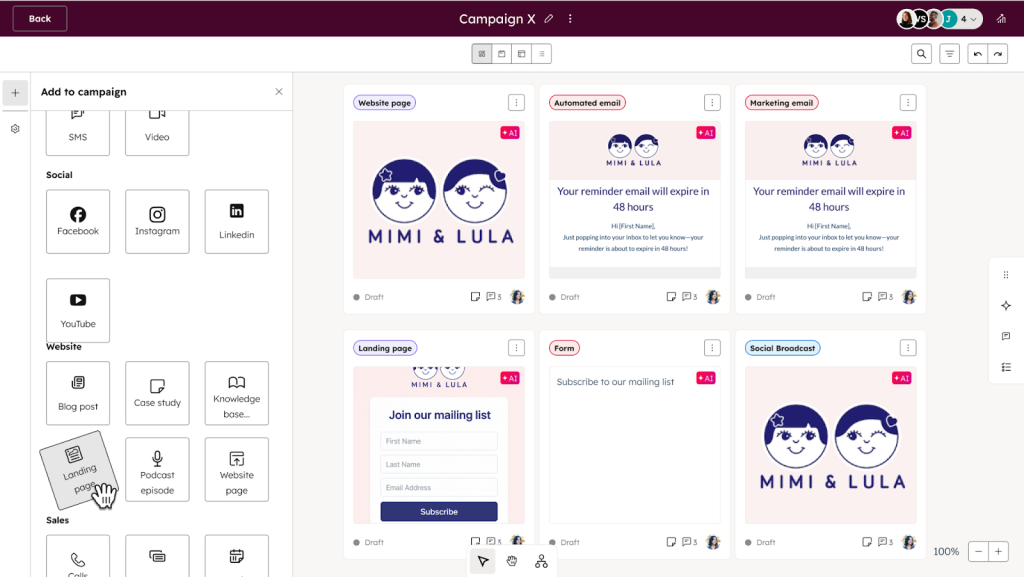
HubSpot’s built-in hubs create a unified business platform:
- Marketing Hub includes email marketing, landing page creation, social media scheduling, and SEO tools. Sales Hub features advanced pipeline management, email tracking, meeting scheduling, and powerful sales sequences for automated follow-ups.
- The Service Hub offers ticketing systems, knowledge bases, and customer feedback surveys. This integrated approach eliminates the need for multiple point solutions.
- HubSpot’s sales automation through “Sequences” allows sales reps to enroll contacts in personalized email series. This ensures no lead falls through the cracks while maintaining personal touch.
Pricing and Scalability
- HubSpot offers a robust free CRM plan including contact management, deal pipelines, live chat, and email marketing. This provides incredible entry-level value for businesses.
- Paid tiers scale based on selected Hubs and user count. Starter plans begin at $9/month per seat, Professional tiers start at $45/month per seat, and Enterprise solutions begin at $75/month per seat.
- The tiered structure allows companies to start small and add functionality as they grow. However, costs can escalate quickly for Professional and Enterprise features.
Attio CRM: Customization and Flexibility at Its Core
Customization and Data Modeling
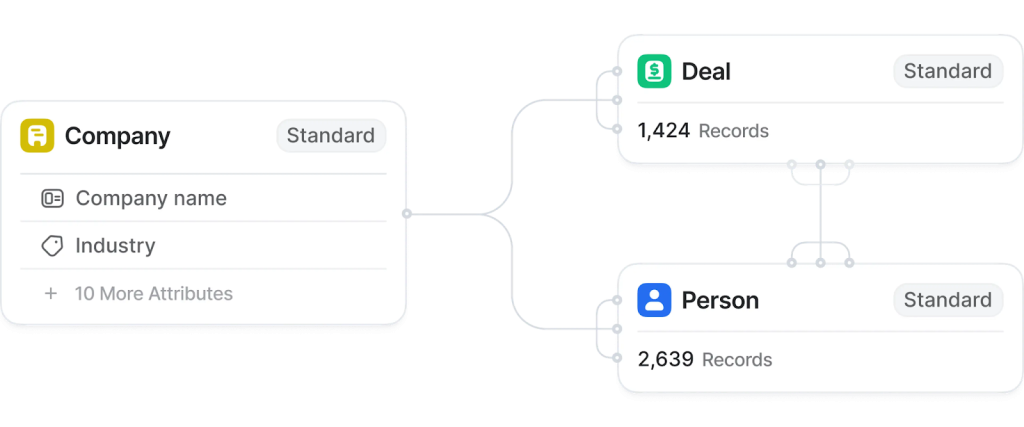
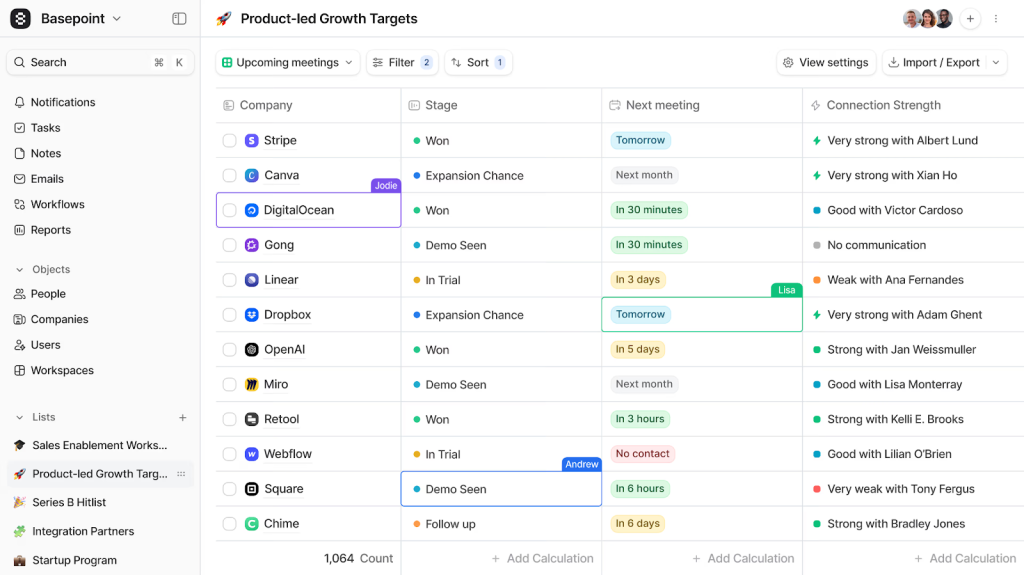
Attio’s core strength lies in flexible data modeling. Users can create custom objects like ‘Investors’, ‘Projects’, or ‘Candidates’ with custom attributes without coding knowledge.
This allows businesses to model their CRM around specific processes rather than forcing workflows into predefined fields. The spreadsheet-like interface feels familiar to users accustomed to Excel or Airtable.
The biggest USP of Attio is the ability to add custom objects very easily.
Unique Collaboration Tools
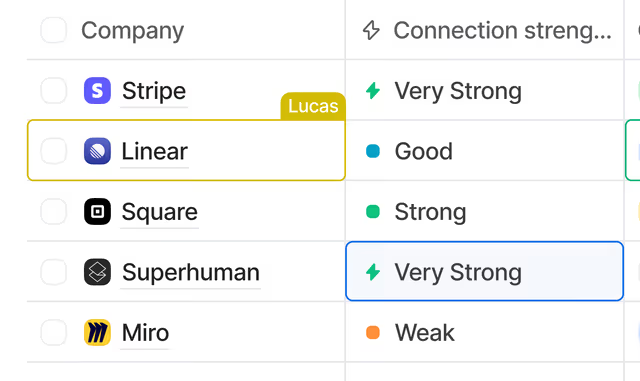
Real-time multiplayer collaboration sets Attio apart from traditional CRMs. Multiple users can work simultaneously within records, seeing each other’s cursors and edits like Google Docs.
Users can leave comments and @mention colleagues on any record. This centralizes communication and eliminates scattered email threads about customer interactions.
The full-featured mobile app maintains the desktop experience’s speed and functionality. Teams can access records, manage pipelines, and collaborate on the go.
Cost-Effectiveness and Niche Features
Attio’s generous free plan supports up to 3 users with core features. Plus plans cost $29/user/month, Pro plans $69/user/month, with Enterprise pricing available. They also have a very generous startup plan. Businesses can also get 10% off for 1 year when signing up with a referral link.
Unique features include automated data enrichment from email and calendar data, providing insights into communication history and relationship strength. The Chrome extension allows CRM access directly from Gmail or any website.
AI-powered tools summarize meeting notes and generate email drafts, streamlining administrative tasks.
Comparative Analysis: HubSpot vs Attio
| Feature | HubSpot | Attio |
|---|---|---|
| Starting Price | Free (2 users) | Free (3 users) |
| Paid Plans | $9-$4,700+/month | $29-$69+/user/month (Enterprise pricing available after chatting with sales) |
| Best For | Unified platform across marketing, sales, service, and operations | Flexible, custom workflows for contact and pipeline management |
| USP | All-in-one CRM, Free to Start | Open-ended customization |
| Key Strength | Mature platform with enterprise scalability | Highly flexible data modeling |
| Integrations | 2,000+ apps | Growing ecosystem (limited) |
| Learning Curve | Low | Low |
| Customization | Excellent (Better usability – no developers required) | Excellent |
A more detailed comparison between HubSpot and Attio is available on crmtools.fyi.
HubSpot vs Attio: User Interface and Usability
Both HubSpot and Attio offer clean, intuitive interfaces that make adoption seamless. HubSpot’s professional dashboard provides immediate access to powerful features across marketing, sales, and service. This gives teams the flexibility to start simple and unlock advanced capabilities as they grow.
Attio takes a minimalist approach with a streamlined interface that aligns with modern productivity tools, ideal for teams prioritizing simplicity over depth.
HubSpot vs Attio: Feature Set and Customization
- Workflow Automation: HubSpot’s automation engine triggers actions across marketing, sales, and service based on extensive criteria. Attio offers flexible automation tied to custom data models, easier to set up for unique processes.
- Data Enrichment: HubSpot enriches company data using internal databases for industry, size, and location information. Attio focuses on relationship intelligence by syncing email and calendar data.
HubSpot vs Attio: Support and Community
HubSpot’s massive advantage lies in its extensive community and training resources. HubSpot Academy offers free courses and certifications, while the knowledge base and community forums provide comprehensive support.
Attio provides responsive email and chat support with fast response times for higher-tier plans.
HubSpot also has a large partner network, while Attio’s is new and developing.
Which CRM Should You Choose?
Choose HubSpot if: You need proven enterprise scalability with built-in marketing, sales, and service tools. Your team values extensive third-party integrations and comprehensive training resources. You have budget flexibility for scaling features.
Choose Attio (10% off for 1 year) if: You’re a modern team requiring highly flexible data modeling and custom objects. Real-time collaboration and intuitive interfaces matter more than extensive feature sets. You’re willing to trade advanced enterprise features for lower per-user costs at higher tiers.
Tech startups and venture capital firms have excellent options with both platforms. HubSpot’s free CRM tier provides startups with enterprise-grade tools from day one, including marketing automation, sales pipelines, and service capabilities – allowing businesses to scale without switching platforms. Attio serves early-stage teams well with flexible data modeling for those with simpler, contact-management-focused needs.
Frequently Asked Questions
Which CRM offers better value for startups?
HubSpot provides great value for startups of all types, offering enterprise-grade contact management, deal pipelines, email marketing, and live chat at no cost. As your startup grows, you can add advanced features like marketing automation and sales sequences based on your specific needs. Attio offers lower entry costs for top-tier paid plans, making it suitable for early-stage teams with basic contact management requirements and limited budgets.
How easy is it to migrate data from Attio to HubSpot?
Migration requires exporting Attio data as CSV files, formatting for HubSpot’s structure, and using HubSpot’s import tools. Professional migration services may be needed for complex data structures.
Which CRM provides more robust mobile capabilities?
Both offer excellent mobile apps. HubSpot covers more ecosystem features including business card scanning. Attio’s is praised for speed and collaboration focus.
Ready to transform your customer relationships?
Try HubSpot free and experience the power of an all-in-one CRM platform that scales with your business growth.
Both HubSpot and Attio offer compelling solutions for different business needs. Consider your team size, customization requirements, and growth trajectory when making your decision.
The right CRM will become the foundation of your customer success strategy.